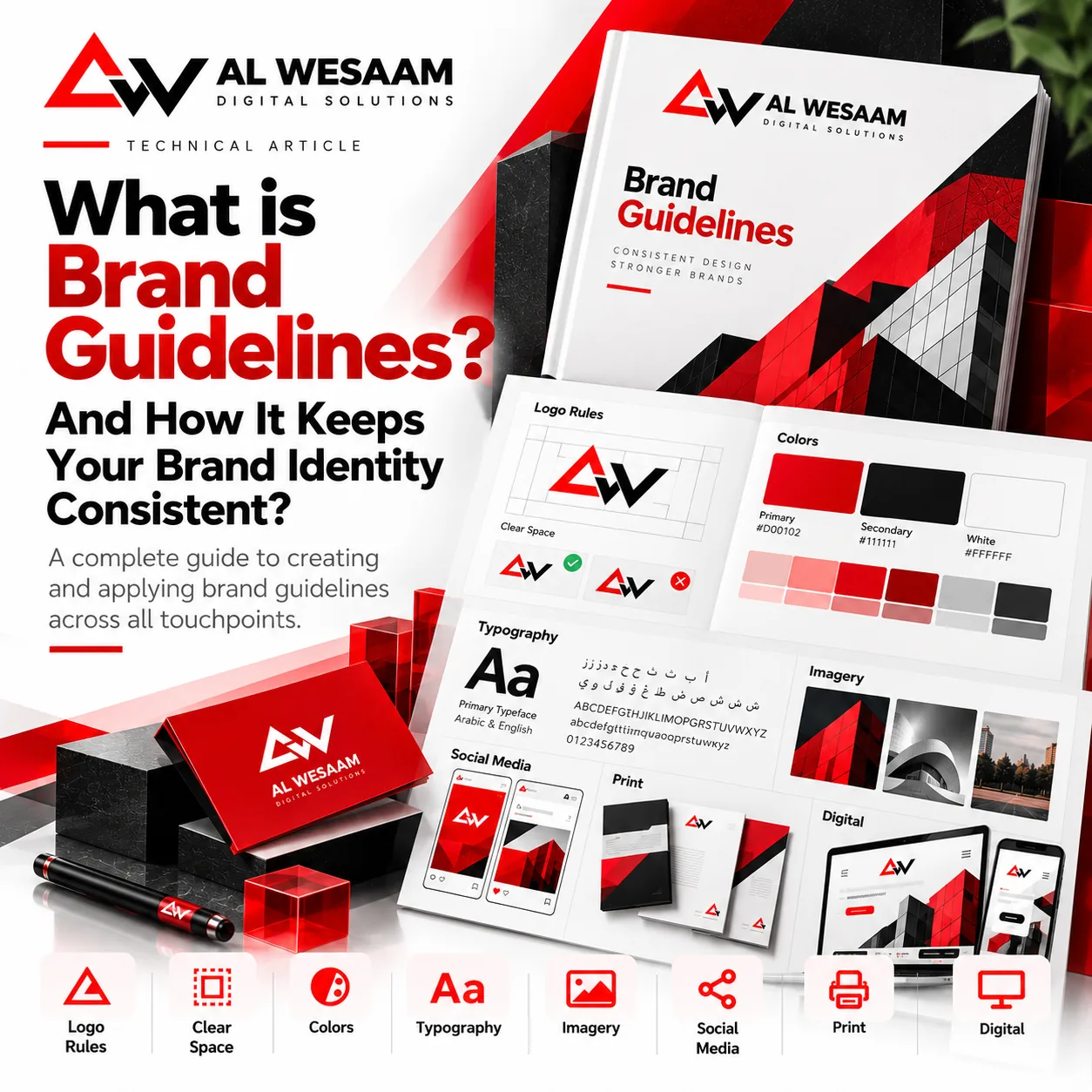
What Are Brand Guidelines? How a Brand Guide Keeps Your Identity Consistent
Brand guidelines are the reference for how a brand looks and communicates. They go beyond displaying a logo, turning an identity into rules, examples, and approved assets that designers, developers, and marketers can use without reinventing it for every project.
Key Takeaways
A brand guide centralizes essential decisions: what to use, how and when to use it, and what to avoid.
Its value comes from implementation: accessible assets, reusable templates, clear ownership, and regular reviews of actual output.
Logo, identity, and guidelines: what is the difference?
A logo is a recognition element. Identity is the broader visual and verbal language: colors, type, composition, imagery, and communication. Guidelines explain how those elements work together.
An attractive logo cannot prevent a distorted version appearing in an advertisement or an unrelated font entering a sales deck. A guide defines the correct choices before production and provides a shared basis for review.
What should a brand guide contain?
Begin with a concise definition of the brand personality and audience, then document the rules people need in daily work. Scope should follow practical needs rather than page count. A small brand may need a compact guide; a multi-product organization may need much more detail.
| Section | What it documents |
|---|---|
| Logo | Approved versions, clear space, minimum size, backgrounds |
| Colors | Roles, values, shades, and contrast pairs |
| Typography | Families, weights, sizes, Arabic and English rules |
| Imagery and icons | Photography, treatments, composition, icon style |
| Voice and tone | Writing personality and context-dependent tone |
| Applications | Examples and templates for web, social, and print |
| Asset management | Approved files, licenses, versions, and ownership |
Logo rules: show correct and incorrect use
Define the primary, compact, and monochrome versions and when each applies. Specify clear space using a measurable unit from the logo itself, and establish digital and print minimum sizes after checking legibility.
Show examples that prohibit stretching, changing proportions or colors, and using illegible backgrounds. No single clear-space or minimum-size rule fits every logo; it should be defined for the actual asset being delivered.
Colors and typography: from names to working rules
Document color roles, not just codes: brand expression, text, surfaces, actions, and status messages. Record tested foreground/background pairs, RGB and HEX values for digital assets, and print specifications agreed with suppliers.
For typography, define Arabic and Latin families, supported weights, heading and body hierarchy, line spacing, numerals, and mixed-direction content. Listing two font names without application examples is not enough.
Distribution ratios such as 60/30/10 can be flexible composition aids, not mandatory rules. Neutral surfaces may occupy most of the layout even when red is the primary brand color.
Imagery, icons, motion, and writing voice
Define suitable photography, lighting, crops, and treatments with acceptable and unsuitable examples. For icons, specify style, stroke, and sizes instead of mixing unrelated libraries in one interface.
Voice is the stable personality; tone changes with the situation. A friendly brand can welcome someone during signup and be precise and empathetic during a complaint. Provide actual examples of an advertisement headline, an error message, and a support reply.
When motion is part of the identity, document its purpose and behavior and accommodate people who prefer reduced motion. Consistency does not mean making every channel an identical copy.
Test guidelines across channels and languages
Apply the rules to a website page, social post, business card, and presentation before approving the guide. Check small-scale logo clarity, long mobile headings, and physical print output rather than relying only on a screen preview.
Review Arabic and English together: visual font balance, reading direction, prices, and dates. Preserve meaning and brand personality rather than duplicating every element position or sentence length.
How do you create guidelines people actually use?
Collect current assets and remove obsolete versions from the approved handoff folder while retaining an archive. Write direct rules with examples and templates rather than theory alone. Test the guide with its implementers: recurring questions reveal missing guidance.
- Define personality, priorities, and guide scope.
- Document logos, colors, typography, visual style, and voice.
- Prepare usable templates and a clearly named asset library.
- Review real applications with design, development, and marketing.
- Assign approval ownership and a process for exceptions and updates.
Files and versions: make the reference dependable
Deliver vector logo assets where needed, appropriate digital images, editable templates, and an easy-to-navigate guide. A PDF or SVG extension alone does not make a file suitable for every purpose; export settings, color specifications, and dimensions matter.
Include a version, date, changelog, and links to approved assets. Check font and image rights before distribution and document license ownership. An attractive guide can become a source of errors if a superseded version remains in use without notice.
How do you measure its impact?
Review regular samples of output: correct logos, approved fonts and colors, and outdated templates. Track production time, correction rounds, asset discoverability, and audience recognition tests.
Compare before and after using consistent definitions and comparable samples. Do not attribute revenue changes to guidelines alone: pricing, products, and advertising spend also matter. Effective guidelines reduce unnecessary guesswork while retaining room for purposeful creativity.
Frequently Asked Questions
Does a small business need brand guidelines?
Yes, but it can start with essential rules and frequently used assets, expanding as the team and channels grow.
Are a brand book and brand guidelines the same?
Terminology varies. A brand book may emphasize story and strategy, while guidelines emphasize implementation. Agree on deliverables rather than the label alone.
Do guidelines prevent creativity?
No. It defines constants and boundaries while allowing new compositions and campaigns within the brand personality.
When should guidelines be updated?
When an approved asset changes, a channel is added, or a rule proves impractical. Record changes and notify users.
Related Articles9
Make your identity usable, not just attractive
Discuss the guidelines, assets, and templates your team needs with AL WESAAM and define a package that suits your brand stage.